
Learning vs. Parroting: Competence, Attribution, and Who Owns the Truth

By David Acosta | Achilles Heel Tactical Instructor

I’ve been thinking about this idea of “parroting” in the training industry, and the more I think about it, I believe the real tension starts when learning, teaching, money, and competition begin to overlap.
Almost everything we know was learned from someone else. Someone exposes us to a better way of understanding something, we train it, test it against experience, develop the skill, and eventually integrate it with everything else we’ve learned. At some point, some of that knowledge becomes part of what we’re qualified to pass along ourselves.
That’s how disciplines evolve.
But parroting is different. I’d define it as borrowing another person’s language, concepts, or philosophy without developing the understanding and competence underneath it. Essentially, you know how to say the thing… you just haven’t actually earned an understanding of what you’re saying. But it sounds good, so why not.
Learning Isn’t the Same as Understanding
Real learning requires earned competence. You have to test the information, perform it, understand why it works, recognize where it applies and where it doesn’t, and eventually integrate it into your own understanding.

That distinction becomes pretty obvious when circumstances change. Someone may be able to reproduce what they were shown under familiar conditions, repeat the terminology, and even explain the prescribed solution. But what happens when the problem changes? Can they recognize what’s happening, diagnose it, adapt, and explain why? Or are they dependent on somebody else having already given them the answer?
The objective shouldn’t simply be to reproduce what another person demonstrated. It should be to develop enough understanding and competence to actually apply what was learned.
The same standard should apply to instructors.
Take two examples.
Someone attends a course and shortly afterward begins selling essentially the same course using the original instructor’s curriculum, drills, progression, terminology, analogies, and teaching structure. I think the original instructor has a legitimate grievance. The new instructor could provide attribution every single time they teach and still be reproducing a product somebody else built.
Now extend that process over time…
That same person continues studying under multiple instructors, trains seriously, develops measurable competence, accumulates experience, tests those ideas against reality, discards some things, refines others, and eventually develops their own synthesis of everything they’ve learned.
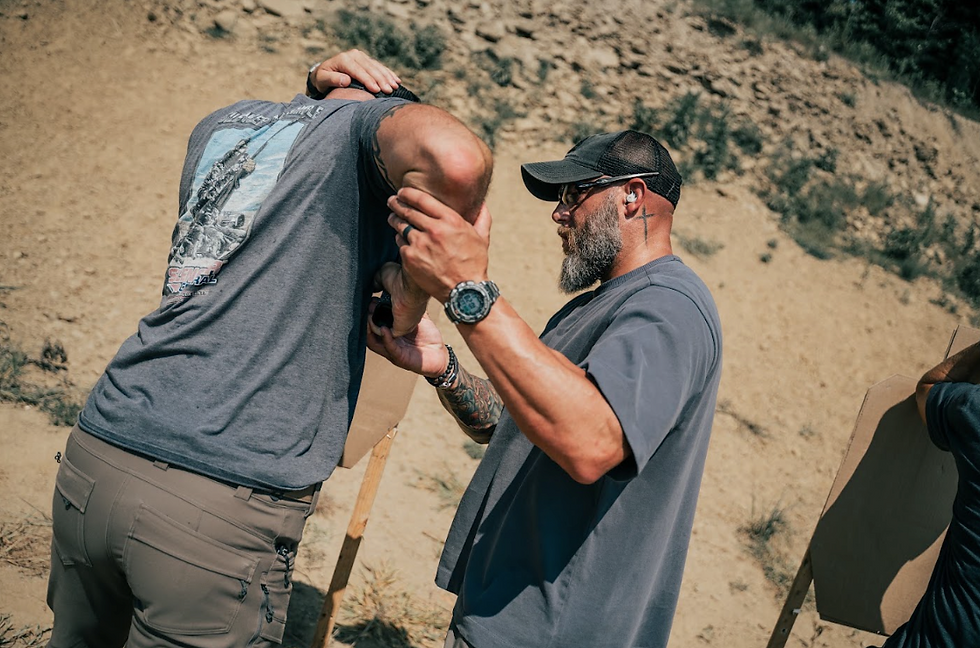
The passage of time isn’t what makes those situations different. It’s the continued study, competence, experience, testing, refinement, and synthesis.
Of course some of what that person eventually teaches will still trace back to the people who helped educate them along the way. As it should… those people were part of their education.
Those scenarios may share the same starting point, but I don’t think they describe the same thing.
There’s a similar distinction in product development. Someone can study the work of people who came before them, learn why particular design choices work, develop their own skill, experiment, fail, refine, and eventually produce something informed by that lineage. That’s considerably different from obtaining somebody else’s finished product specifically to measure it, reproduce its dimensions and design choices, and bypass the developmental process that produced it.
One is learning from someone else’s work. The other is shortcutting someone else’s work.
Good Instructors Should Want Their Students to Surpass Them
We also have to recognize that everyone was a student at some point. Most of what any of us know is some combination of inherited knowledge, personal experience, continued study, and refinement.
We all stood on somebody else’s shoulders to get where we are today.
There’s another side to that relationship though. When we take on the responsibility of teaching or mentoring someone, I believe we should genuinely want that person to become better, more capable, and perhaps even take what we’ve taught them further than we were able to.

None of us walks this path forever. Age, injury, family, career, time, or simply the limits of our own abilities eventually affect how far we can personally carry something.
If the people we teach eventually become peers, improve upon what we gave them, and carry that knowledge forward after we no longer can… I’d argue that’s part of successful mentorship.
If someone eventually develops abilities or insights beyond what I was able to give them, I don’t see that as a failure of instruction.
I see it as evidence that the process worked.
When Learning Becomes Competition
I think money is where this conversation becomes uncomfortable.
The student you wanted to become capable can eventually become a peer… and that peer may eventually become a competitor.
Now livelihood, reputation, market share, intellectual property, professional identity, and differentiation enter the conversation.
That tension gets even more complicated in an industry where instructors routinely share portions of their methodology publicly to demonstrate value and establish credibility. Some of that information is inevitably going to be learned outside the classroom. That doesn’t mean publishing something forfeits ownership of the work built around it, but it does mean we have to be realistic about the difference between publicly transmitting an idea and retaining exclusive control over the underlying knowledge.

Concerns about ownership are legitimate. People can own their written work, branding, products, curriculum, and genuinely original ways they developed, organized, or expressed something. Taking those things wholesale and selling them as your own isn’t the same thing as learning, and simply becoming competent at performing someone else’s material doesn’t erase where that material came from.
But what about the underlying principles someone helped you understand?
That’s where I think things get much harder to claim ownership over.
If something accurately describes reality or reliably produces a particular result, capable people examining the same problem may eventually arrive at similar conclusions. Some learn those principles directly from an instructor, others encounter them somewhere else, and some may independently arrive at essentially the same understanding through experience.
That doesn’t mean every similarity is independent discovery either. If someone adopts another instructor’s unusual terminology, analogies, drills, progression, and teaching structure, where that material originated still matters.
Arriving at similar conclusions and reproducing somebody else’s particular expression of those conclusions aren’t the same thing.
But once someone has tested an idea, developed competence in it, and become convinced through evidence and experience that it better explains or solves a problem, what are they supposed to do?
Continue teaching something they now believe is inferior simply because the person who helped them understand the better approach may now compete with them?
That doesn’t make sense to me.
Attribution matters. Give credit where it’s due. Don’t claim someone else’s work as your own, and don’t reproduce somebody else’s product and call it learning.
If you attach somebody else’s name to what you’re teaching, make sure you understand their contribution well enough to represent it accurately. Attribution isn’t a substitute for competence.
At the same time, being part of someone’s intellectual lineage doesn’t mean we permanently own everything that person eventually comes to understand.
Who Owns the Truth?
That’s ultimately where my thoughts keep landing…
Who owns the truth?
We can own our contribution to understanding it, our expression of it, and the things we build around it. We should acknowledge the people who helped us understand something more clearly.
But if an underlying principle accurately describes reality, we didn’t create that reality… we recognized it, tested it, articulated it, or helped somebody else understand it.
I don’t believe any of us gets to own that underlying truth simply because we were the first person in someone else’s life to explain it well.
That’s why I believe instructors should operate within an open system. Be objective enough to consider different perspectives. Be willing to modify your position when presented with something better. Recognize the contributions of those who came before you while continuing to develop your own understanding.

Good ideas are supposed to spread and effect change.
I mean, that’s kind of the point of teaching in the first place, isn’t it?
Learn from those who came before you. Do the work. Give credit where it’s due. Add something valuable when you can… and pass it along honorably.
Someone I consider a mentor, and a mentor to men who have mentored me, once told me…
“David, honor and shame are opposite sides of the same coin. Every choice we’re presented with results in a flipping of that coin. Our decisions determine which side of that coin lands face up.” - Sayoc Tuhon Tom Kier
Comments