
Inside Achilles Heel Tactical: Training Standards, Team Growth, and the Road Ahead

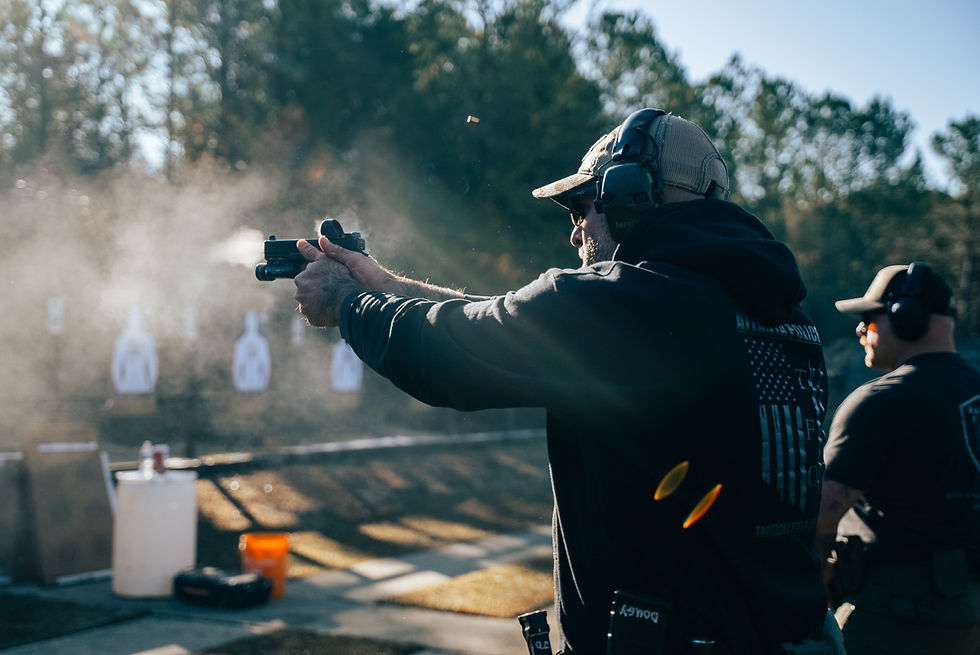
What follows comes from a fire-pit conversation with Clement of Khimaira Strategy Tactics after Ohio Range Day, when the event was over, and the noise had subsided.
We discussed what AHT was built to do, how Ohio Range Day has evolved, and why bringing on the right instructors has enabled the brand to grow without compromising standards.
This is not a recap or a highlight reel. It is a straightforward look at how AHT operates and where it is headed.
The AHT Origin Story: Building From Zero, Then Scaling Through Standards
Crawley’s background is rooted in service. He entered the military as an infantry Marine, moved into the scout sniper pipeline, and deployed three times. In 2017, after recognizing the cost of time away from his family, he transitioned from the military to law enforcement for stability and continued purpose.
That same year, he started AHT with no playbook. He built the business from scratch—learning to form the company, build a website, and run operations as he went. The first training “rosters” were literally paper sign-up sheets at a local range near Canton, Ohio.
Early on, the model was simple: four-hour clinics, range fees covered, and a focus on whether the training actually worked for civilians, military, and law enforcement shooters.

The turning point was discovering what he valued most: teaching, watching students solve problems in real time, and building training that produces measurable progress.
What Sets AHT Apart: “We Don’t Certify. We Qualify.”
Crawley is blunt about a common problem in the training market: a certification culture that convinces people they are capable because they received a certificate.
AHT takes a different posture.
Performance over paperwork: The goal is proficiency on demand, not a certificate.
Pressure as a feature: Students are pressure-tested—on the clock, observed, and pushed to perform now, not “when they’re ready.”
Homework mindset: A day of training is not a finish line. It’s a baseline, followed by a year’s worth of focused work if the student takes it seriously.
“Questioning the why” approach: The curriculum is built around understanding decisions, not memorizing steps.

Ohio Range Day: Why It Matters to the Brand
Ohio Range Day (ORD) has grown from a small gathering to an industry-wide training event. This year’s event drew 250 selected attendees over three days, with instructors and students traveling from multiple countries.
Crawley’s emphasis is not “bigger.” It’s better.
Selection is the point: ORD is not open to anyone. AHT chooses the attendee roster.
Character matters: Skill can be trained. Being a solid human is harder to find and harder to vet. ORD is built around that filter.
Professionalism changes the experience: When the crowd is safe, competent, and serious, vendors, trainers, and students can focus on their training and the experience.
A cause bigger than brand: Crawley highlighted Sentinel Foundation’s mission, raising awareness around child exploitation and human trafficking, as a major purpose driver for the event. This year, we raised over $10,000 for their mission.
The Team Expansion: Why Adding Instructors Changed the Trajectory
For years, AHT was run by Rick. That model can grow only so far before it breaks.
AHT began formalizing a scalable training staff during the 2020–2023 period, with an early addition from within the student base. Crawley’s criteria wasn’t fame. It was mindset, work ethic, and the ability to keep improving.

As AHT brought on additional instructors, such as Paul Costa, David Acosta, and Shane Parman, the brand gained something most training companies never build:
Multiple strengths under one banner
Shared curriculum development
A broader geographic footprint
More training bandwidth without lowering standards
Crawley framed it simply:
A team can move farther and faster than one person, because you’re stacking experience and skill sets instead of relying on a single lifetime of lessons.
The Next 5–10 Years: National Reach Without Diluting the Standard
Rick’s long-range view is market ownership through quality: excellent trainers distributed across the country, a continuously evolving curriculum, and a benchmark that is hard to compete with.
The key elements of that direction:
More instructors, carefully selected
Nationwide coverage
Curriculum that evolves through collaboration
Maintaining exclusivity at ORD while expanding visibility
The goal is not just expansion. It’s building a training ecosystem where the brand’s standards travel with the instructors, not just the logo.

International Growth: Why Europe Keeps Showing Up
International attendance didn’t happen by accident. Crawley described it like momentum: a few early attendees led to more, and now ORD attracts students from multiple countries.
His view of the value is practical:
In many parts of Europe, shooting culture is largely sport and hunting. Practical firearms training for military and law enforcement is harder to access at scale.
ORD concentrates talent—multiple trainers, multiple approaches, one location—so international students can pressure-test ideas, learn frameworks, then take the work back to their units.
The event also reduces friction: rentals and vendor support make it more feasible for travelers.

The Bottom Line: AHT is Building People, Not Customers
At the end of the day, AHT exists for one reason: to foster a more accountable, prepared, and skilled community through making education accessible for all. Not paper-qualified shooters. People who are willing to do the work before, during, and after training.
As this brand continues to grow, the standard will always require the highest skill to be performed on demand. We will keep selecting the right people, building the right instructors, and developing training that holds up when it matters.
Comments