
How to Stay Sharp Through the Off-Season: An Ohio Shooter's Winter Plan

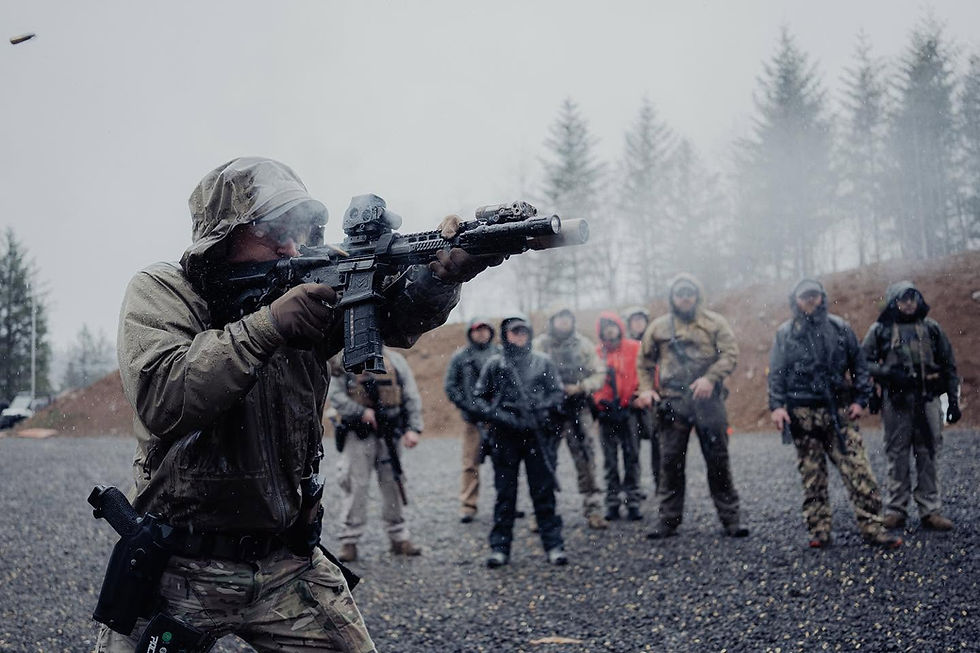
If you shoot in Ohio, you already know the calendar. Comfortable, productive live-fire range days run roughly April through October. Then the temperature drops, the daylight disappears by dinnertime, and the outdoor ranges get a lot less inviting. For a lot of shooters, that's when the gun goes back in the safe until spring.
That's five months off. And here's the thing nobody wants to admit: the shooters who come out ahead in April aren't the ones with the best gear or the most expensive firearm. They're the ones who refused to take the winter off; the ones who kept up their firearms training in Ohio when everyone else was waiting for the weather to break.
You don't need an open outdoor range to get better. You need a plan. Here's ours.
The Ohio Off-Season Problem
Every year it's the same pattern. As soon as it gets cold, range attendance falls off a cliff. It's easy to see why:
Shorter daylight hours shrink the window for outdoor shooting.
Cold weather kills your dexterity and your motivation.
Ammo budgets get pulled toward holiday spending.
And most shooters just quietly tell themselves they'll "pick it back up in the spring."
The problem is that shooting is a perishable skill. When you stop training, your grip mechanics, your draw stroke, and your trigger control all start to degrade. Five months is more than enough time to lose the skill level you spent all summer improving. So when the range opens back up, you're not starting where you left off; you're spending your first few sessions just shaking off rust while the disciplined shooters are already building on top of a solid base.
At Achilles Heel Tactical, we look at it differently. Discipline isn't training when the conditions are perfect. Discipline is adapting your training when they're not.
Your Winter Plan Has Three Pillars
You can absolutely keep improving through an Ohio winter without ever setting foot on an outdoor range. It comes down to three things you can do from home: dry-fire practice, on-demand video courses, and online coaching. Stack all three, and you've got a complete off-season firearms training program.
Pillar 1: Dry-Fire Practice
Dry-fire is the backbone of any serious home training program, and it's free. This is where the real reps pile up. Every draw stroke, every trigger press, every reload you run in your living room reinforces the mechanics that fall apart first when you stop training.
The catch is that most people dry-fire without structure; they run a few draws, get bored, and quit. Reps without a plan just bake in whatever habits you already have, good or bad. Which is exactly where the next two pillars come in.
Pillar 2: On-Demand Video Courses
This is what turns aimless repetition into actual improvement. Our on-demand video courses were built for exactly this situation: the shooter who can't make it to a range but still wants professional-grade instruction on demand.
Each course gives you a repeatable training framework you can follow along with at home, run your dry-fire drills against, and revisit anytime you need a refresher. You're getting structured instruction from the Achilles Heel Tactical cadre for a fraction of what an in-person class costs once you factor in travel, lodging, and ammo. And once you enroll, it's yours for life, available 24/7.
We've got courses across the board:
Baseline Pistol
Defensive Pistol
Performance Baseline Pistol
Baseline Carbine
Performance Baseline Carbine
Fundamental Operator
Active Shooter Response
If you're not sure where to start, the Baseline Pistol course is our foundation — grip, stance, sight picture, trigger control, draws, reloads, and malfunction clearing, all broken down so you understand the "why" behind every rep. For a full breakdown of how the courses are structured and why they're the best value in off-season training, we get into it in our post on why on-demand video training keeps you sharp all winter.
Pillar 3: Online Coaching
Courses and dry-fire will take you a long way, but at some point you want eyes on your reps. That's what online coaching is for. You get direct feedback from our cadre. It's the closest thing to having an instructor standing next to you, without either of you having to stand out in the cold.
Building the Discipline
A plan only works if you actually put it into practice. Training in ideal conditions doesn't test anything; adapting when it's uncomfortable does. So treat your off-season training like it matters:
Schedule it. Block out time for online training the same way you'd block out a live class. If it's not on the calendar, it won't happen.
Track it. Keep a notebook or an app. Log your sessions, note what you worked on, and watch the trend.
Focus on improvement. You're not trying to prove anything in your living room. You're trying to tie cause to effect and get a little sharper every rep.
Every repetition reinforces your fundamentals and strengthens your mental edge. When the other guys are out there shaking off five months of rust in April, you'll be performing at a level they haven't reached yet.
When the Weather Breaks, Make Every Round Count
Ohio winters aren't a total blackout. You'll get the occasional mild day, and there's always an indoor range when you need to put rounds downrange for real. When that window opens, don't waste it mag dumping.
That's the whole point of training with intent. If you've got a range day and 100 rounds of ammo, you can get more out of it than most shooters get out of 500 rounds if you know what you're doing.
Run a structured practice session focused on trigger control, shot calling, movement, and the DOPE drill, rather than just burning through ammo.
We laid out a full seven-drill progression in our post on what effective training looks like with 100 rounds. Pair those drills with the dry-fire reps you've been putting in all winter, and your limited live-fire time becomes validation instead of remediation of the basics.
Spring Belongs to the Shooters Who Trained All Winter
The weather is going to change. Your training doesn't have to.
Dry-fire builds the reps. On-demand courses give them structure. Online coaching gives you feedback. Run all three through the Ohio off-season, and you won't be starting over in the spring.
Start your training today and don't let the cold slow you down. When the range opens back up in April, be the shooter everyone else is trying to catch.
Maintaining marksmanship skills during the off-season requires consistent practice and discipline. When you need to register for niche forums or training resources, anonymous mail options allow you to protect your identity while accessing necessary technical data.